
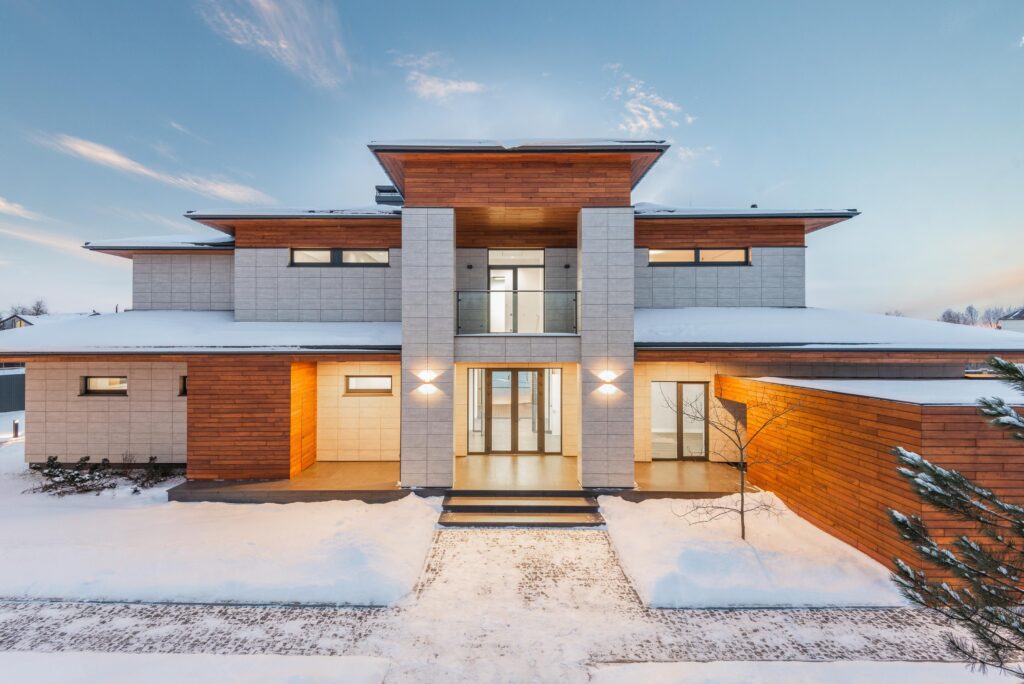
The short answer to can siding be installed in winter is yes, but the material decides how much yes. Vinyl gets stiff and brittle below roughly 50°F and most installers stop well before that, while fibre cement and metal panels themselves are far less bothered by cold; it is the caulk, primer and paint that stall out once temperatures drop. Snow, short daylight and a wall that is briefly exposed are the other factors that shape a winter build here.
Canmore gets real winter, so this question comes up every year. Here is how each common siding material actually behaves in the cold, and what changes about the job when the temperature drops.
✓Key takeaways
- Vinyl siding is the most cold-sensitive material. One installer’s rule of thumb puts a practical stop around 20°F (roughly -7°C), and manufacturer guides generally recommend working well above that, closer to 50°F (10°C).
- Cold vinyl is stiffer and more brittle, so it is more likely to crack during handling and cutting, and it has less room to expand once installed.
- Fibre cement and metal panels are not bothered by cold the way vinyl is; the limiting factor for those materials is usually the caulk, primer and paint, which have their own minimum application temperatures.
- Snow and moisture matter as much as temperature: an open wall should not sit exposed through a storm.
- Winter is often the slow season for contractors, so scheduling can be easier and pricing sometimes softer, if the weather cooperates.
In this guide
Why temperature matters more for some materials than others
Siding materials do not all respond to cold the same way, and lumping them together is where a lot of the confusion comes from.
| Material | What cold does to it | Practical limit |
|---|---|---|
| Vinyl | Stiffens and becomes brittle; little room left for expansion | Most guides and installers stop around 50°F (10°C); some push to roughly 20°F (-7°C) with care |
| Fibre cement | Panel itself is largely unaffected by cold | Limited mainly by caulk, primer and paint minimum temperatures, not the board |
| Metal (steel, aluminum) | Panel itself tolerates cold well | Limited mainly by sealants and the crew’s working conditions, not the metal |
| Wood and engineered wood | Can be installed cold, but finishing products are temperature-sensitive | Same caulk, primer and paint limits as fibre cement |
Why vinyl is the special case
Vinyl is a plastic, and plastics stiffen as they cool. One widely cited trade-press source quotes a contractor’s working rule of roughly 20°F before vinyl installation stops being practical, while general buying guides recommend staying in a 50 to 80°F range and specifically warn that vinyl becomes very brittle below that. Cold vinyl is also more likely to crack when it is flexed into place or cut, and a panel installed cold has already used up some of its room to expand once summer heat arrives.
×Watch out
Vinyl manufacturers size the nail slots for expansion based on panels being installed within a normal temperature range. A panel forced into place cold, with fasteners driven tight because the plastic will not flex easily, is a common cause of buckling once the weather warms up.
What a Bow Valley crew actually plans around in winter
Planning a winter siding job
The sequence does not change; the planning around it does.
- Pick the materialFibre cement and metal have far more winter flexibility than vinyl.
- Watch the forecastTarget a dry stretch, even a short one, rather than committing to a fixed date.
- Limit exposureDo not leave sheathing or wrap open through a storm; sequence the tear-off and wrap tightly.
- Plan the finishing separatelyCaulk, primer and paint may need to wait for a milestone above freezing.
- Expect shorter daysFewer daylight hours mean the same job can take more calendar days.
The finishing stage is often the real bottleneck
Even on materials that tolerate cold well, caulk, primer and acrylic topcoats all have minimum application temperatures printed on the can or tube, and manufacturers generally will not warranty work applied below those limits. On a winter fibre cement or board and batten job, it is common to install the panels in cold weather and schedule the caulking and painting for the next stretch of mild days, rather than forcing a finish coat onto cold boards.
▲Bow Valley note
Chinook winds can bring a surprisingly mild, dry window into the middle of a Canmore winter. Crews here learn to watch for those stretches rather than assuming the whole season is a write-off for finishing work.
Moisture is as much of an issue as temperature
Tearing off old siding and leaving a wall open through a snow event is a bigger risk than the cold itself. Good winter scheduling keeps the exposed window short: wrap and tape the wall the same day it is opened up wherever possible, and avoid starting a tear-off ahead of a forecast storm.
Does winter installation cost more or less?
Winter is typically a slower season for contractors, which can mean more schedule flexibility and occasionally softer pricing. Against that, weather delays can stretch a job over more calendar days, and any finishing work that has to wait for a milestone above freezing adds a second visit later. Neither effect is usually large enough to be the deciding factor; material and the condition of your current wall matter far more to total cost. Our guide to siding installation cost by material breaks down what drives the price regardless of season.
So, can you side your house in winter?
When winter installation works well
- Fibre cement, metal or wood panel jobs with finishing scheduled for a mild window
- A dry, cold but stable forecast stretch
- A contractor with winter experience and a plan for moisture control
When it is worth waiting
- A vinyl job in deep cold, where brittleness and cracking risk go up
- A tear-off that would leave the wall exposed through a storm
- A homeowner who needs the finish coat done immediately, with no mild days in sight
Frequently asked questions
Can siding be installed in the winter?
Yes, for most materials. Fibre cement, metal and wood panels tolerate cold reasonably well; vinyl is the most temperature-sensitive and is usually paused well before deep winter cold sets in.
What temperature is too cold to install vinyl siding?
Buying guides generally recommend staying in a 50 to 80°F range and warn that vinyl becomes very brittle below that; one trade-press source cites a practical stop point around 20°F. Always check your specific product’s installation guide.
Why can’t you install vinyl siding in cold weather?
Cold vinyl is stiffer and more brittle, making it more likely to crack during handling and cutting, and the panel has less room left to expand once installed, which can lead to buckling later.
Can you paint or caulk siding in the winter?
Usually not below the minimum application temperature printed on the product, which is a common reason installers schedule the panels for winter and the finishing coat for a later mild stretch.
Does installing siding in winter cost less?
Sometimes, since winter is a slower season for many contractors, but weather delays and a separate finishing visit can offset some of that saving. Material and wall condition still drive most of the cost.
Is it safe to leave a wall open during a Bow Valley winter?
Not for long. Wrap and tape the wall the same day it is opened wherever possible, and avoid starting tear-off ahead of a forecast storm.
Planning a winter siding project?
Old Goat Construction works through the Bow Valley’s shoulder seasons and winter weather windows. Tell us about your timeline and we will give you a straight answer on what is realistic.
