
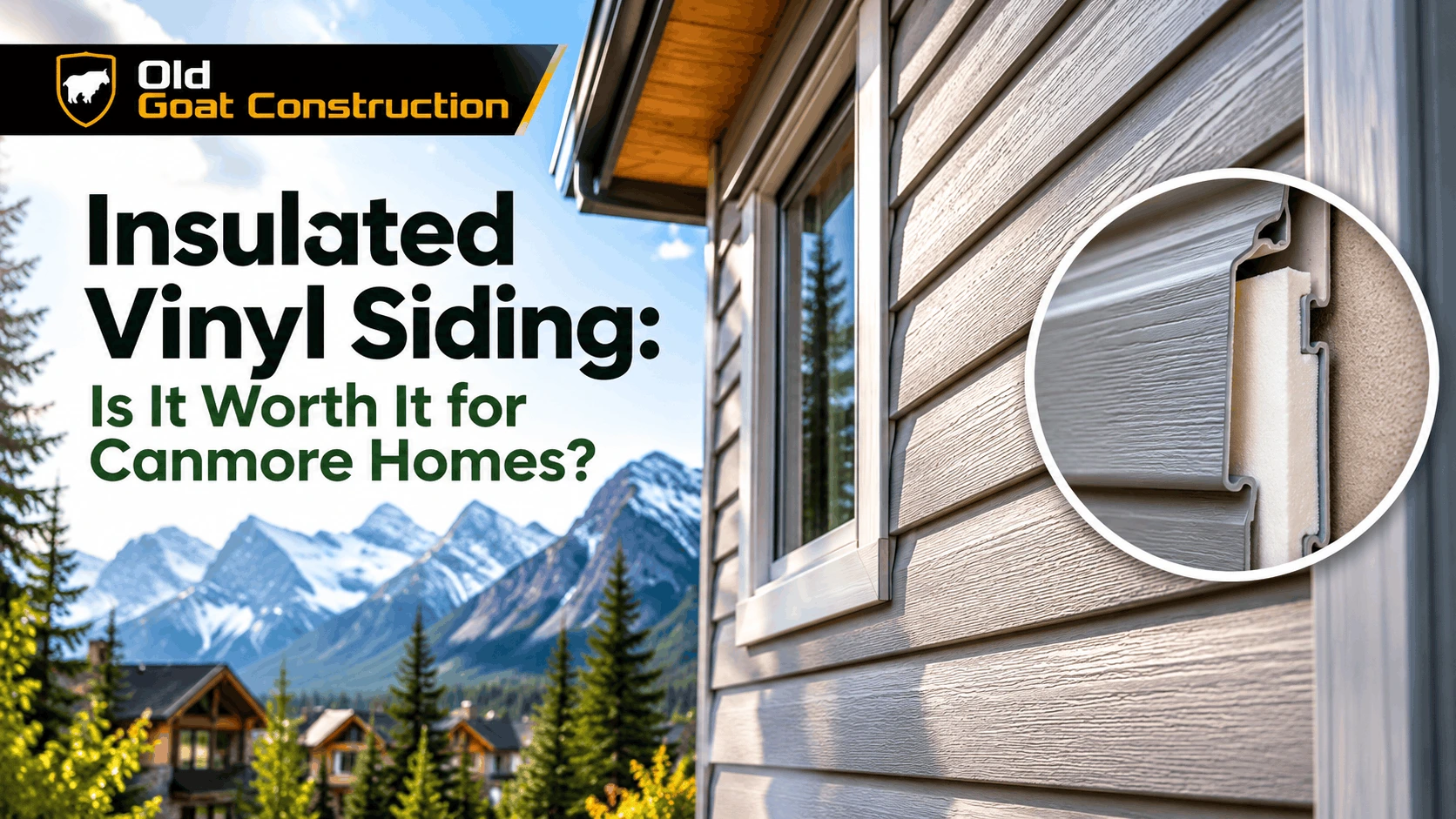
If your exterior siding is aging, you may have come across insulated vinyl siding while comparing replacement options. Unlike conventional hollow-backed vinyl panels, insulated versions include a contoured foam backing that adds some thermal resistance. That sounds especially attractive in Canmore, where winter comfort, drafts and heating costs are all practical concerns.
However, the most important question is not simply whether insulated siding has a higher R-value. It is whether that extra insulation makes sense for your existing walls, your project budget and the siding details needed to manage moisture and mountain weather.
What Is Insulated Vinyl Siding?
Insulated vinyl siding is exterior cladding with rigid foam insulation attached to the back of the siding panel. The foam is typically shaped to fit the panel profile, providing a layer of support and additional resistance to heat flow. Many systems use expanded polystyrene (EPS) foam, although construction and testing vary by manufacturer.
The panels still function primarily as exterior cladding: they improve the home's appearance and help protect the wall assembly from weather. The foam backing adds an insulating component; it does not turn siding into a complete weatherproof wall system.
How Does Insulated Vinyl Siding Work?
Heat travels through a home in several ways. Wood framing can conduct heat more readily than insulated wall cavities, a phenomenon known as thermal bridging. A layer of insulation on the exterior side of the wall can help reduce this pathway where it is continuous and correctly installed.
Insulated vinyl siding places foam behind the cladding, adding thermal resistance over portions of the wall. It can also produce a firmer-backed panel compared with some conventional hollow-backed vinyl systems. Actual performance depends on the product, installation details and how much uninterrupted insulation covers the wall.
That last point matters. A wall also loses heat through air leaks, windows, openings and inadequately insulated assemblies. Improving siding alone will not correct every cause of cold rooms or high heating bills. For a technical explanation of heat flow and insulation, see Natural Resources Canada's Keeping the Heat In.
Benefits of Insulated Vinyl Siding
1. Additional thermal resistance
The foam backing helps slow heat transfer compared with an otherwise comparable uninsulated cladding product. It may be a useful extra layer for an older home with limited exterior upgrades, particularly when siding replacement is already planned.
2. Potentially better wall comfort
Reducing some heat transfer through wall components may improve surface-temperature consistency and comfort in certain conditions. Results will vary; insulated siding should not be described as a guaranteed cure for drafts, which frequently relate to air leakage.
3. A lower-maintenance exterior finish
Like conventional vinyl, insulated vinyl generally does not need routine painting. Regular cleaning and inspections remain important, especially after heavy winds or impact damage. Maintenance requirements still depend on the manufacturer's product instructions.
4. More supported panel profile
The contoured foam can support the siding profile and may reduce some visible flexing. However, it does not make panels impact-proof. Hail, sharp impacts and extreme conditions can still cause damage.
5. Opportunity to improve the exterior as a whole
A siding project creates a useful opportunity to examine deteriorated sheathing, faulty flashing, gaps around openings and other building-envelope weaknesses. In many cases, correcting those problems matters more than the siding's advertised insulation value.
What Are the Drawbacks of Insulated Vinyl Siding?
It is important to compare realistic benefits with the full project scope, not just a product brochure.
- Higher upfront product cost: Insulated products typically cost more than standard vinyl siding, and specialized accessories or detailing can add labour.
- Limited insulating value: The foam layer is generally far less substantial than a dedicated exterior insulation retrofit.
- Installation complexity: Foam thickness and panel geometry can affect corners, windows, doors, trim and penetrations.
- Moisture detailing remains critical: Siding does not eliminate the need for appropriate drainage and properly connected flashing.
- Not every home is a good candidate: Existing wall construction, planned energy upgrades and local wildfire exposure may point toward other cladding solutions.
Insulated Vinyl Siding vs Regular Vinyl Siding
| Feature | Regular vinyl siding | Insulated vinyl siding |
|---|---|---|
| Backing | Typically hollow-backed panel | Foam backing attached to panel |
| Added insulation | Minimal from cladding itself | Some additional thermal resistance |
| Typical material price | Lower | Higher |
| Maintenance | Routine cleaning and inspection | Routine cleaning and inspection |
| Wall drainage | Requires suitable weather-resistive details | Still requires suitable weather-resistive details |
| Best fit | Cost-conscious exterior renewal | Siding renewal with some added insulation |
If energy performance is the main objective, compare a third option too: conventional siding over a properly designed separate continuous insulation layer. Although it may involve a more extensive renovation, this approach can allow better control over insulation thickness and drainage detailing.
What R-Value Does Insulated Vinyl Siding Provide?
R-value measures a material's resistance to heat flow. A higher number generally means greater resistance, but a product's R-value should not be confused with the effective R-value of the entire exterior wall.
Natural Resources Canada describes insulated siding values generally around R-2 to R-4 (RSI 0.35 to 0.70). This is a broad reference range—not a performance guarantee for every current product. Ask for the tested R-value of the exact product and assembly being quoted.
For context, NRCan identifies separate insulation and siding as a more reliable approach when substantial additional exterior insulation is needed. The correct strategy depends on your wall's existing insulation, air barrier, moisture control, space constraints and budget.
Will insulated vinyl siding lower heating bills?
It may reduce some heat loss, but savings cannot be predicted reliably from the siding R-value alone. Home size, existing insulation, air leakage, window performance, heating equipment and occupant habits all influence energy use. Avoid treating manufacturer marketing estimates as a guaranteed annual saving for a Canmore home.
Will it stop drafts?
No—not by itself. Drafts often indicate air leaks around windows, penetrations, rim joists or other building details. Those pathways need to be assessed and sealed as appropriate. Foam-backed siding should not be relied upon as the building's primary air barrier.
Considering a Siding Upgrade in Canmore?
Old Goat Construction can discuss your existing exterior, replacement goals and the details that matter for a durable siding project in the Bow Valley.
Discuss Your Siding ProjectCall (403) 542-1552How Much Does Insulated Vinyl Siding Cost in Alberta?
Insulated vinyl typically carries a premium over standard vinyl because of its foam backing and product design. An accurate installed price should account for much more than the panel itself.
- The total measured wall area, corners and gables
- Removal and disposal of existing siding
- Repairs to sheathing, trim or concealed water damage
- Window and door extensions, flashing and accessories
- Scaffolding, access and work around decks or landscaping
- Wall drainage and insulation detailing
- Local labour, supplier availability and project timing
Our existing 2026 vinyl siding installation cost guide gives broader Canadian pricing context, including factors that affect insulated options. You can also compare materials in the siding installation cost guide.
How to assess value: Ask for two comparable written quotes—standard vinyl and the insulated product—with the same tear-off, repairs, flashing and trim scope. Evaluate the incremental cost alongside the actual tested insulation benefit. An estimate that omits wall repairs or flashing work is not directly comparable with a more complete proposal.
Is Insulated Vinyl Siding a Good Choice for Canmore and the Bow Valley?
Canmore homes face cold-weather heating demands, wind, snow, strong sun exposure and periods of freeze-thaw weather. These conditions make proper exterior detailing particularly important.
Cold temperatures and thermal movement
Vinyl expands and contracts as temperatures change. Suitable fastening, manufacturer-specified clearances and correct panel handling are essential. Insulated versions must be installed to their own documented requirements, not treated as interchangeable with conventional panels.
Wind and exposed elevations
Exposed walls may need careful attention to product wind ratings and fastening schedules. The quote should identify the product and whether its installation requirements match the building and site conditions.
Snow, drainage and flashing
Wind-driven moisture and snow accumulation around roofs, decks and openings can expose weaknesses behind cladding. Insulated panels are not a replacement for correctly integrated flashing and a drainage strategy. NRCan cautions that insulated siding should incorporate a drainage feature or an appropriate drainage plane.
Wildfire considerations
Material selection also involves wildfire risk, especially near vegetation and exposed properties. FireSmart Canada provides guidance on wildfire-resistant home improvements. Homeowners prioritizing this issue should compare combustible vinyl systems with non-combustible cladding options and other measures such as vents, decks and the immediate area around the building.
What Matters Most During Installation?
Even premium siding can perform poorly if the underlying wall or installation details are neglected. A careful project should address the following:
- Inspect the existing wall. Look for rot, soft sheathing, loose materials and signs of past water entry.
- Plan the moisture strategy. Confirm how drainage, weather-resistive barriers and flashing will work together.
- Review insulation and air leakage. Decide whether separate insulation or air-sealing upgrades are warranted before covering the wall.
- Detail windows, doors and penetrations. Additional cladding thickness can change how trim, sills and flashings meet the finished exterior.
- Follow the exact product instructions. Fastening, expansion allowances and accessories vary.
- Verify product documentation. Ask for tested thermal performance, installation literature and applicable Canadian evaluation information.
- Confirm permits where relevant. Project requirements depend on the scope of alterations; consult the local municipality for the specific work.
These considerations are also useful when replacing a damaged exterior. If you suspect existing moisture issues, read our water behind siding guide before selecting new cladding.
How to Decide Whether Insulated Vinyl Siding Is Worth It
There is no one-size-fits-all answer. Use the following decision points to compare options fairly.
| Your situation | Practical next step |
|---|---|
| Existing siding needs replacement; wall is otherwise sound | Compare standard and insulated vinyl quotes with matching installation scope. |
| House has persistent drafts or unexpectedly high heat loss | Assess air leakage and overall wall performance before choosing cladding. |
| Planning a major energy retrofit | Compare separate continuous insulation plus cladding against insulated siding. |
| Moisture damage is visible | Investigate and repair the cause before installing any new siding. |
| Wildfire resistance is the top priority | Evaluate non-combustible exterior alternatives and FireSmart measures. |
| Budget is limited | Prioritize essential wall repairs, drainage and correct installation over optional upgrades. |
The most cost-effective siding decision is often the one that fits your home's current condition and your long-term renovation plan. Paying more for insulated panels may be reasonable when you want modest additional resistance and prefer vinyl's finish. But if your walls need major energy or moisture upgrades, it can be smarter to plan the whole wall assembly first.
Talk to Old Goat Construction About Siding Installation
Old Goat Construction provides siding installation and exterior renovation services for homeowners in Canmore and the Bow Valley. Whether you are weighing insulated vinyl against other cladding materials or planning to replace aging siding, it helps to start with your project's actual needs: condition, drainage, durability, appearance and budget.
You can also review our siding repair versus replacement guide if you have not yet decided whether a full upgrade is necessary.
Frequently Asked Questions About Insulated Vinyl Siding
Is insulated vinyl siding better than regular vinyl siding?
It adds some insulation and typically has a foam-supported profile, but it also costs more. Whether it is better depends on your wall's condition, your priorities and whether a separate insulation upgrade would provide greater value.
What is the typical R-value of insulated vinyl siding?
Natural Resources Canada cites a general range of roughly R-2 to R-4 for insulated siding. Actual tested product values vary. The product's rating is not the same as the effective R-value of the complete wall.
Does insulated vinyl siding keep a house warmer in winter?
It can reduce some heat transfer through exterior walls. The comfort impact depends on existing insulation, air leakage, installation details and other building conditions, so no specific improvement is guaranteed.
Can insulated vinyl siding go over old siding?
Sometimes an exterior retrofit can incorporate layers over an existing finish, but this is not automatically appropriate. Existing wall condition, fastening, drainage, flashing, thickness and manufacturer requirements need professional review.
Will insulated vinyl siding prevent moisture problems?
No. Proper flashing, water-resistive barriers and drainage remain necessary. An insulated product should not conceal unresolved leaks or wet sheathing.
Is insulated vinyl siding suitable for Alberta winters?
It can be an option when the specific product is suitable for the home's conditions and installed correctly. Temperature-related movement, wind exposure, drainage and detailing remain important.
Is insulated vinyl siding fire-resistant?
Vinyl-based siding is not non-combustible. For homes where wildfire resilience is a priority, consider the broader FireSmart recommendations and alternative cladding materials.
Can Old Goat Construction provide a quote for siding replacement?
Old Goat Construction offers siding and exterior renovation services in the Canmore and Bow Valley area. Contact the team to discuss the scope and ask about appropriate material options for your home.
Final Verdict: Is Insulated Vinyl Siding Worth the Upgrade?
Insulated vinyl siding is worth considering, but not automatically worth paying extra for. It can add modest thermal resistance to a replacement siding project, and some homeowners may appreciate the supported panel construction and low-maintenance appearance. However, product R-values do not replace sound building-envelope design, and long-term performance depends on appropriate drainage, flashing, air sealing and installation.
For Canmore homeowners, the most useful next step is to compare the insulated siding option with standard vinyl and, where relevant, a dedicated exterior insulation retrofit. Make the choice based on the complete wall—not just the siding label.
Planning New Siding for Your Canmore Home?
Tell Old Goat Construction what you want to improve—appearance, comfort, damaged siding or a full exterior refresh. Get in touch to discuss practical options for your Bow Valley home.
Request a Siding Project QuoteCall (403) 542-1552- Natural Resources Canada — Keeping the Heat In: Insulating Walls (insulated siding, drainage and exterior retrofits).
- Natural Resources Canada — How Your House Works (thermal bridging, air leakage and insulation).
- U.S. Department of Energy — Insulated Siding and Continuous Insulation (technology overview).
- FireSmart Canada (wildfire mitigation guidance).
Information is educational and not a site-specific assessment, energy-saving guarantee, project quote or substitute for applicable manufacturer instructions and local code requirements.
