
Fire-Resistant Siding for Canmore Homes: Which Materials Make Sense?
Planning to replace your home's siding? Learn how fibre cement, metal, stucco, vinyl and cedar compare for wildfire resilience, mountain weather, maintenance and budget in Canmore and the Bow Valley.
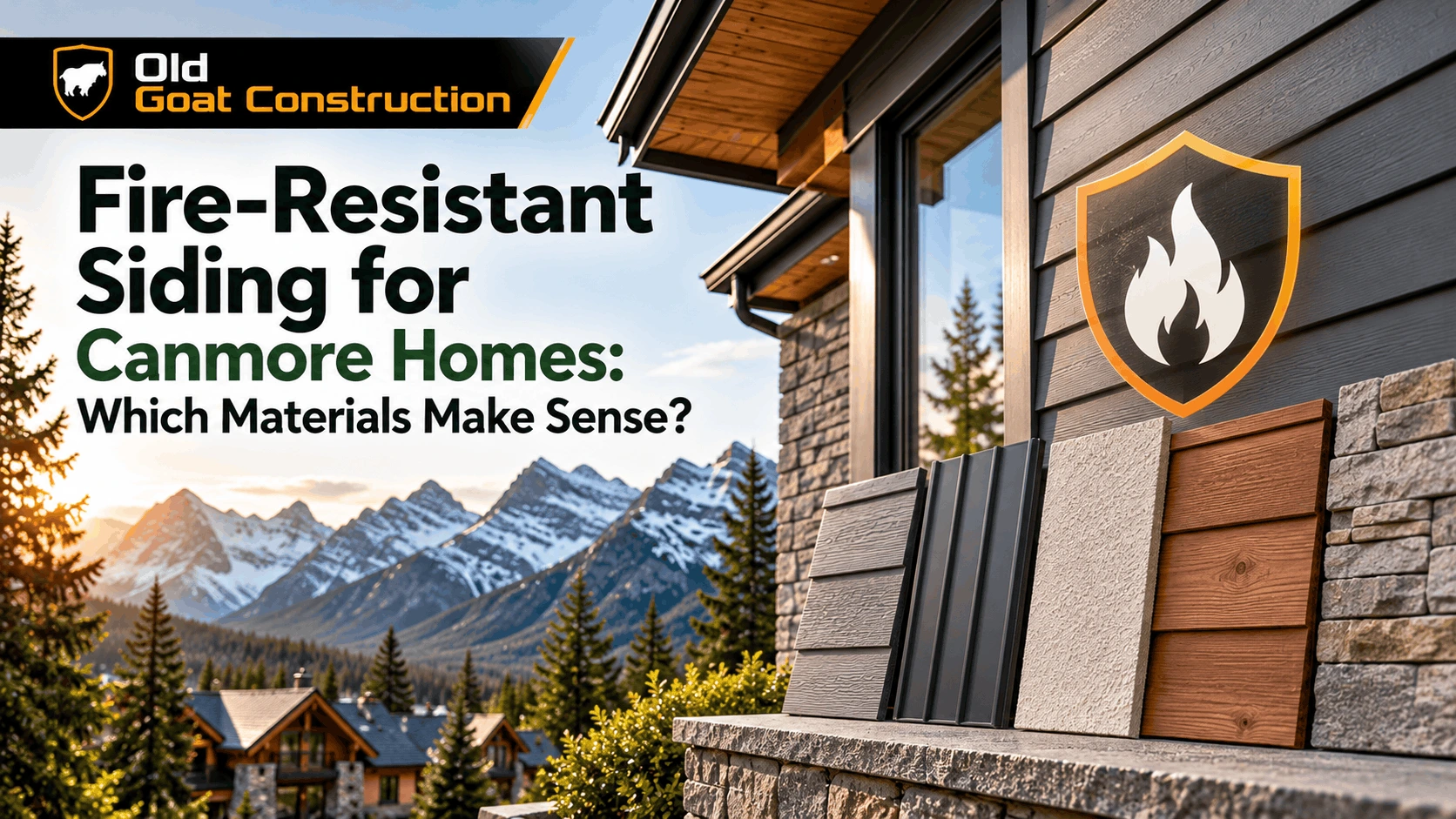
When you choose siding for a home in Canmore, curb appeal is only part of the picture. The exterior also has to perform through cold winters, changing temperatures and exposure to wind and moisture. And in a community taking wildfire risk seriously, the material covering your walls deserves another question: How does it perform when exposed to heat and embers?
For homeowners prioritizing wildfire resilience, fibre cement, metal, traditional cement-based stucco, brick and stone are strong options to explore. FireSmart Canada identifies these types of exterior finishes as offering superior fire resistance compared with more vulnerable claddings. That does not mean any one product can make a house fireproof: the whole exterior, including vents, eaves, decks, landscaping and installation details, matters. FireSmart Canada's construction guidance explains why.
- Fibre cement: A practical option for many homeowners seeking a wood-style finish with better fire resistance.
- Metal: Non-combustible cladding with a distinct look; correct detailing and compatible components remain essential.
- Stucco, brick and stone: Fire-resistant choices, though costs, appearance, weight and installation methods vary.
- Vinyl and untreated wood: May still meet some homeowners' style or budget goals, but they are less protective choices in wildfire exposure.
- Best next step: Compare complete wall assemblies and written quotes, not just siding samples.
Why Fire-Resistant Siding Matters in Canmore and the Bow Valley
Wildfire risk is a local planning consideration, not just a distant concern. The Town of Canmore's FireSmart program encourages residents to reduce combustible materials around their homes and consider non-combustible materials when building or renovating. The Town also describes FireSmart home-property assessment opportunities for residents; check its page for current eligibility and availability.
Flying embers can collect in gaps, vents, gutters and spaces where debris has built up. Cladding matters because it can either resist ignition or leave underlying parts of a wall exposed when subjected to heat. FireSmart Canada specifically warns that vinyl siding may melt under high temperatures, exposing components beneath it.
Good siding installation also matters in ordinary weather. Water-resistant barriers, flashing at windows and doors, manufacturer-required clearances, and properly finished joints help manage moisture. Wildfire resilience and weather resistance are related goals, but neither should be used as a substitute for the other.
Fire-Resistant Siding Options: At-a-Glance Comparison
There is no single best siding material for every Bow Valley home. The right choice depends on desired appearance, project scope, site exposure, maintenance preferences and budget. This comparison focuses on practical decision-making, not a formal fire-rating certification of any particular product.
| Cladding | Wildfire-related consideration | Typical appeal | Trade-off to discuss |
|---|---|---|---|
| Fibre cement | FireSmart identifies fibre cement as a superior fire-resistant option. | Wood-look profiles, durable exterior finish | Heavier product, cutting controls, installation details |
| Steel or aluminum | Metal is non-combustible; performance still depends on the full wall assembly. | Contemporary lines, low routine finishing needs | Dents, profile options, expansion and flashing details |
| Traditional cement-based stucco | Can offer strong fire resistance when the proper system is specified. | Seamless appearance | Cracking and moisture-management detailing |
| Brick or stone | Non-combustible exterior surfaces. | Long-lasting appearance, accent walls | Weight, structural considerations and expense |
| Vinyl | May soften or melt with intense heat. | Lower upfront cost, broad colour selection | Heat vulnerability; may expose materials behind it |
| Untreated cedar/wood | Combustible and generally less protective in wildfire exposure. | Natural mountain-home appearance | Finishing maintenance and ignition vulnerability |
Important: A product's specific tested classification, manufacturer documentation and the complete wall assembly should be checked before treating a proposed finish as compliant with any project requirement.
1. Fibre Cement Siding: A Strong All-Round Candidate
Fibre cement is a common starting point for homeowners who like the lines of traditional lap siding but want to consider a material with better fire resistance. It is available in several profiles and finishes, including styles that resemble painted wood.
Why homeowners consider it
- Fire performance: FireSmart Canada lists fibre cement boards and panels among materials with superior fire resistance.
- Appearance: Horizontal planks and panel styles work with both modern and traditional home designs.
- Maintenance: It does not require the same recurring staining routine as natural cedar, although coating inspections and cleaning remain necessary.
- Material stability: When installed to specification, it can be a durable cladding choice in challenging exterior conditions.
It is not a shortcut around good workmanship. Cutting, fastening, clearances, joint treatment, flashing and sealing must follow the specific manufacturer instructions. Poor installation can undermine the benefits of an otherwise appropriate product.
Already comparing products? See Old Goat Construction's Hardie plank siding installation cost guide for an explanation of material, labour and project-price variables.
2. Metal Siding: Non-Combustible with a Modern Finish
Steel and aluminum cladding can suit homes with contemporary architecture, simple lines or distinctive exterior accents. As metals, they are non-combustible, but homeowners should not assume the full wall behind them is non-combustible too.
Ask about panel thickness, corrosion protection, fastening, movement, flashing and what sits behind the cladding. Some profiles may show dents more readily than others, and the installation method can affect both appearance and durability. Metal may also be used selectively on an exposed wall or architectural feature where appropriate.
Because metal products and installation systems vary widely, compare the exact specifications and installed scope rather than assuming all metal siding performs or costs the same.
Considering new siding for your home?
Old Goat Construction installs and replaces residential siding across Canmore and the Bow Valley. Share your project goals and ask about materials and installation approaches that suit your home.
3. What About Stucco, Brick, Vinyl and Cedar?
Traditional cement-based stucco
Conventional cement-based stucco is a fire-resistant exterior finish, but the exact assembly matters. Do not assume every product labelled “stucco” has the same composition or performance: some exterior finish systems include combustible insulation or other components. Ask for the full system specification and installation method.
Brick and stone
Brick and stone are non-combustible and can provide an attractive exterior finish or accent. Their weight, support requirements, detailing and installation cost make them a different project from installing lightweight lap siding. In an existing home, these choices may require additional design or structural consideration.
Vinyl siding
Vinyl remains appealing to some homeowners because of its relatively low initial cost and accessible maintenance. Its weakness for wildfire resilience is exposure to high temperatures: it can soften or melt and reveal vulnerable materials underneath. That doesn't mean every vinyl-sided home must replace its exterior immediately. It means wildfire exposure should be one of the explicit factors in a future renovation decision.
Cedar and other wood siding
Wood cladding creates a warm, traditional mountain-home appearance, but untreated wood is combustible. Stains and coatings also need regular attention. If wood is central to the design, homeowners should discuss specific product treatments, tested assemblies and other risk-reduction measures with a qualified professional rather than assuming a coating makes ordinary wood non-combustible.
For an overview of broader pricing differences, read the existing siding installation cost comparison. It covers vinyl, fibre cement, cedar, metal and other exterior options without repeating a full cost breakdown here.
FireSmart Planning Goes Beyond the Siding Material
New cladding is only one part of improving a home's wildfire resilience. FireSmart Canada and the Town of Canmore both emphasize the interaction between construction details and combustible material near a house.
Pay attention to vents, eaves and openings
Gaps and unprotected openings may allow embers to enter concealed spaces. FireSmart guidance recommends properly protected vents and careful detailing around eaves and exterior openings. Verify the right products and installation details for the home rather than installing mesh or sealing ventilation in a way that creates another problem.
Keep the immediate perimeter clear
The Town of Canmore's FireSmart information describes the immediate zone within 1.5 metres of a home as an area to prioritize non-combustible materials and reduced fuel. Wood piles, dry leaves, combustible mulch and other flammable storage against the wall can increase exposure even when the siding itself offers better fire resistance.
Inspect decks, fences and attached features
Attached wooden decks, fences and stored items can create paths for fire spread toward an exterior wall. FireSmart Canada suggests using non-combustible breaks where appropriate, including between a combustible fence and the house. Review how the surrounding elements fit together, not just the wall finish.
Don't overlook flashing and moisture protection
When old siding is removed, it may be possible to inspect visible wall conditions and discuss any needed flashing, trim or water-resistant barrier work. Adding a more fire-resistant surface without managing moisture properly could leave an expensive problem hidden behind the new finish.
What Does Fire-Resistant Siding Cost in Alberta?
Cost is one of the biggest practical differences between materials, but an accurate project comparison needs more than a per-square-foot number. A straightforward single-storey wall costs differently from a complex home with steep access, extensive trim, damaged sheathing or difficult scaffolding requirements.
Old Goat Construction's 2026 siding cost guide cites published Canadian installed-price ranges of roughly $8.40–$15 per square foot for fibre cement, with Calgary-specific guides putting Hardie fibre cement at about $10–$16 per square foot. The same guide shows wide ranges for metal, stucco and other materials. These are published planning estimates, not a local project quote, and they can change by product, site and scope.
When comparing quotes, ask each contractor to separate or clearly describe:
- Removal and disposal of existing siding
- New cladding material and matching trim
- Water-resistant barrier, flashing and weatherproofing scope
- Required sheathing or underlying-wall repairs, if found
- Scaffolding, difficult access and finishing work
- Product and workmanship warranty terms
A less expensive bid that leaves out essential detailing is not necessarily a better value. The goal is a complete, durable exterior for your home and budget.
How to Choose Siding for Your Canmore Home
Start with your priorities instead of choosing the first material sample you like.
- Decide what matters most. Is the priority wildfire resilience, a natural exterior look, low maintenance, budget or a combination?
- Confirm the specific material. Ask about exact products, manufacturer documentation and tested fire-related classifications where applicable.
- Look at the full wall. Discuss flashing, insulation, the water-resistant barrier, vents, trim and existing damage.
- Ask about local requirements. Permit and code obligations vary with the project and jurisdiction. Confirm them with the municipality and qualified project professionals.
- Compare itemized quotes. Make sure each proposal covers the same work so the totals are genuinely comparable.
- Plan maintenance. Even durable, fire-resistant cladding needs inspection and prompt attention to openings, sealants and damaged sections.
Old Goat Construction offers new siding installation, siding replacement and upgrades, exterior repair, weatherproofing, and trim, fascia and soffit installation. Learn more about its siding installation services in Canmore and the Bow Valley.
Planning a Siding Upgrade in Canmore or the Bow Valley?
Whether you're exploring fibre cement, metal or another exterior finish, Old Goat Construction can discuss your siding project, existing home conditions and the work involved. Get in touch to describe your goals and request a quote.
Request a Siding Quote →Call (403) 542-1552
Serving Canmore, Banff, Exshaw, Dead Man's Flats, Harvie Heights and surrounding Bow Valley communities.
Frequently Asked Questions About Fire-Resistant Siding
What siding material is best for wildfire resilience?
FireSmart Canada identifies fibre cement, stucco, brick and other non-combustible exterior finishes among better options for wildfire resistance. Metal cladding is also non-combustible. The best option for a particular home depends on its complete wall system, installation details, project goals and applicable requirements.
Is Hardie board siding fireproof?
No exterior siding makes an entire house fireproof. Fibre cement is widely considered a fire-resistant cladding option, but the whole home's vulnerability also depends on vents, openings, roofing, decks, nearby combustible materials and installation details. Review the exact product's documentation.
Is metal siding better than fibre cement?
Both can be strong choices when wildfire resilience is a priority. Metal is non-combustible; fibre cement is also recognized for superior fire resistance and offers different traditional siding appearances. Compare specific assemblies, maintenance needs, appearance and installed cost before deciding.
Is vinyl siding safe in a wildfire-prone area?
Vinyl siding can soften or melt in high heat, which may expose the wall behind it. FireSmart Canada recommends considering non-combustible or ignition-resistant materials when upgrading vulnerable exteriors. Risk reduction also includes managing vegetation, debris and vulnerable openings.
Can I keep the cedar look without installing wood siding?
Yes. Some fibre cement products are available with wood-grain textures and profiles inspired by traditional wood siding. Review actual samples and available finishes to see whether the appearance suits your home.
Do I need a permit to change siding in Canmore?
Requirements depend on the project scope and applicable municipal rules. A like-for-like exterior update and a project involving structural changes may be treated differently. Confirm the requirements with the Town of Canmore before starting work rather than assuming a blanket exemption.
Can Old Goat Construction help with siding replacement?
Yes. Old Goat Construction lists new siding installation, replacement and upgrades, exterior repairs, weatherproofing and related finishing among its services for Canmore and the Bow Valley. Contact the company to discuss a particular material or project.
Final Thoughts
For a Canmore homeowner already planning an exterior upgrade, wildfire resilience is worth putting on the checklist alongside budget, appearance and mountain-weather performance. Fibre cement, metal, stucco, brick and stone all offer different ways to improve the fire-related characteristics of the outer surface. But the value of any material depends on the full wall assembly, sound installation and good maintenance around the house.
For practical guidance on a renovation scope, contact Old Goat Construction to discuss your siding replacement or installation plans.
Sources & Further Reading
- FireSmart Canada — Construction Guidance: Fire-resistant exterior materials, vents and openings.
- FireSmart Canada — Protect Your Home: Home upgrades and property maintenance.
- Town of Canmore — FireSmart: Local wildfire-risk reduction and property resources.
- Old Goat Construction — Siding Installation Cost Guide (2026): Published pricing reference and cost factors.
Editorial note: This article provides general homeowner education, not a site-specific fire-safety assessment, code interpretation or guarantee of wildfire protection. Product and permit requirements should be verified for the individual project.
